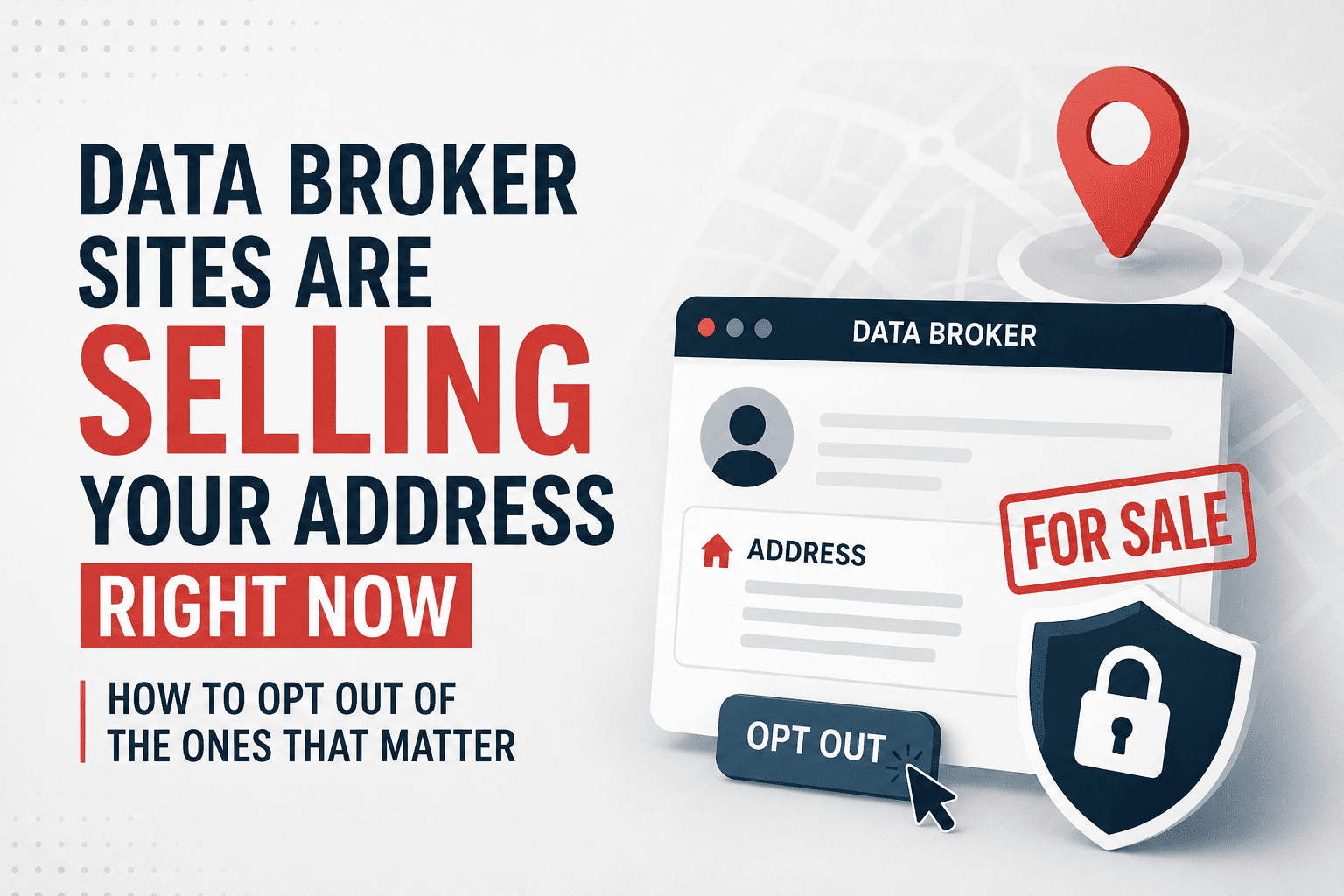
A company unknown to you at the present time is marketing a file containing your name, residential address, telephone number, and list of family members for just a couple of dollars. And there is nobody stopping you from purchasing that information. However, I am sure you did not give permission to sell your personal information.
There were no hackers involved, and no breach of security occurred. This is simply how data brokering business works openly and on a daily basis.
Data brokers are those companies which collect personally identifiable information from various public sources, apps, buying history, and online behavior. They compile the gathered information in the searchable databases which are being sold to marketing agencies, background checkers, and even any person who pays for them via a credit card. It is impossible to delete yourself from every broker database; however, deleting yourself from 15 to 20 top “people search” websites eliminates the possibility of becoming a victim of spam phone calls, stalkers, and identity theft.
What Exactly Is a Data Broker?
A data broker is a business entity that gathers private details about individuals who have no affiliation with them and subsequently sells or licenses those details to another party. You have never registered with them. You have never agreed to their terms and conditions. Yet, they have gathered information about you all the same.
These companies fall into a few overlapping categories:
- People-search sites — Whitepages, Spokeo, Radaris, BeenVerified, and similar sites that let anyone type in a name and pull up an address, phone number, age, and relatives.
- Background-check networks — TruthFinder, Instant Checkmate, and Intelius, which package the same underlying records into “reports” sold for a fee.
- Marketing data aggregators — companies like Acxiom, Epsilon, and LexisNexis Risk Solutions that combine purchase history, demographics, and online behavior into profiles sold to advertisers.
- Risk and identity databases — firms that sell data used for credit prescreening, insurance underwriting, and fraud scoring.
The Federal Trade Commission has been documenting this industry since well before most consumers were paying attention. Its landmark study found that a handful of brokers held thousands of individual data points on nearly every American adult, often without any way for people to see what was collected or correct it. You can read the original findings in the FTC’s data broker transparency report.
How Do They Get Your Information in the First Place?
Nobody hands data brokers a folder with your details. They assemble it piece by piece, from sources most people never think about.
Public Records
Property deeds, voter registrations, marriage licenses, and court filings are public by law in most states. Brokers scrape these records automatically and refresh them constantly, which is why an old address you moved away from years ago can still show up attached to your name.
Apps and Devices
Plenty of free apps sell location and behavioral data as a side business, often buried in permissions nobody reads. If you have never audited what your phone shares in the background, our guide on how to stop apps from tracking you on iPhone and Android walks through the exact settings to change.
Browser and Device Fingerprinting
Even when you block cookies, sites can still identify your device through a technique called fingerprinting, which reads your screen size, fonts, and browser configuration to build a unique signature. We break down how this works in our browser fingerprinting explainer.
Loyalty Programs and Purchase History
Grocery store cards, warranty registrations, and online checkouts often include fine print permitting the retailer to share or sell your data to “partners.” Those partners are frequently data brokers.
Social Media and Public Posts
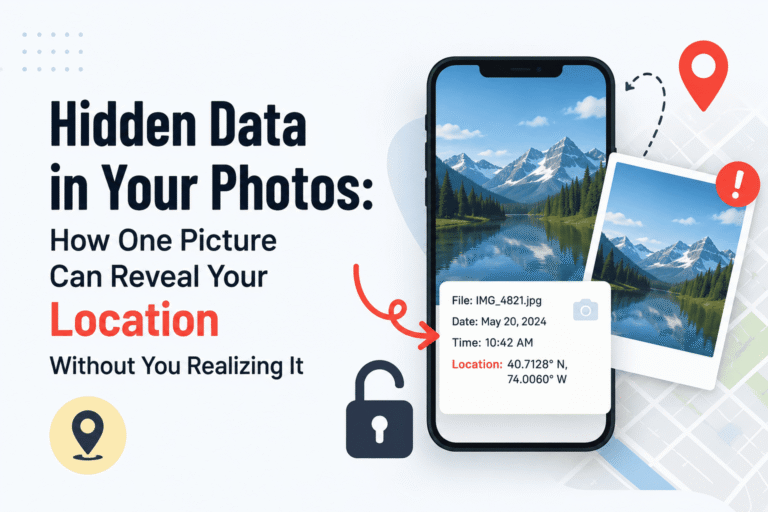
Photos carry more than what is visible in the frame. Many images still contain embedded location metadata, something we cover in detail in how pictures reveal your location.
Who Actually Buys This Data?
This is the part most people never picture clearly. It is not one shadowy buyer — it is a whole marketplace.
| Buyer Type | What They Use It For |
|---|---|
| Advertisers and ad-tech platforms | Building targeted ad profiles based on income, habits, and location |
| Insurance and lending companies | Prescreening applicants and adjusting rates or offers |
| Debt collectors and skip tracers | Locating people who have moved or changed numbers |
| Political campaigns | Micro-targeting voters based on inferred beliefs and demographics |
| Scammers and stalkers | Purchasing cheap public reports to find a target’s address or phone number |
| Employers and landlords | Running informal background checks outside official screening services |
That last row is the uncomfortable one. People-search sites do not verify who is buying a report. A $20 background check reveals the same address and phone number to a landlord, an ex-partner, or a scammer running a targeted phishing attempt. Our piece on AI voice cloning scams that sound exactly like family shows how a leaked phone number and a few public details are often all a scammer needs to build a convincing fake emergency call.
Why This Is a Bigger Privacy Risk Than It Sounds
A single data point rarely matters much on its own. The danger is what happens when dozens of small details get merged into one profile.
- Physical safety risks — Domestic violence survivors and stalking victims have been located through people-search sites even after moving and changing their number.
- Identity theft — Fraudsters combine a broker profile with a leaked password to answer security questions like “what city did you live in” or “who is a close relative.”
- Scam targeting — Scammers buy targeted lists of homeowners, seniors, or specific income brackets to run tailored phishing and phone scams.
- Price and opportunity discrimination — Inferred profiles have been used to vary insurance quotes, loan offers, and ad pricing based on assumptions about a person’s income or health.
- Loss of control — Once your data enters the broker ecosystem, it gets resold, licensed, and copied across dozens of sites you never dealt with directly, making full removal genuinely difficult.
The Consumer Financial Protection Bureau flagged similar concerns in its 2024 proposed rule aimed at limiting how brokers sell sensitive financial and identifying data, which you can read in the Federal Register rule on data broker practices.
The Data Brokers That Matter Most
You do not need to chase down thousands of obscure brokers. A small group of “people-search” sites account for the overwhelming majority of what shows up when someone Googles your name.
| Broker | What It Typically Exposes | Priority to Remove |
|---|---|---|
| Whitepages | Address, phone number, age, relatives | High |
| Spokeo | Address history, phone, social profiles, photos | High |
| BeenVerified | Address, criminal records, phone, relatives | High |
| Radaris | Address, employment history, relatives | High |
| MyLife | “Reputation score,” address, background summary | Medium |
| Intelius / TruthFinder / Instant Checkmate | Full background reports (shared database) | Medium |
| FastPeopleSearch / PeopleFinders | Free, easily searchable address and phone listings | High |
| Acxiom / LexisNexis / Epsilon | Marketing and risk profiles (not public-facing, but widely resold) | Medium |
Opt-out links and forms change often, so rather than following a fixed link that may go stale, search for “[broker name] opt out” directly and use the current form on the company’s own site. That single habit avoids the single most common failure point in manual removal: outdated instructions pointing to a dead page.
How to Opt Out, Step by Step
1. Search Your Own Name First
Google your full name along with your city, and again with your old cities if you have moved. Note every site that returns a hit with your real address or phone number.
2. Submit Opt-Out Requests Directly
Most brokers require you to locate your own listing on their site, then submit a removal request through a form, sometimes confirmed by email. Expect each one to take a few minutes, and expect to repeat the process every few months, since brokers refresh their data from public records.
3. Use California’s DROP Tool If You Qualify
If you are a California resident, you now have an option nobody else in the country has yet. The state’s Delete Request and Opt-Out Platform, known as DROP, lets you submit one request that reaches every data broker registered with the state at once, rather than filling out a separate form for each one. Data brokers were required to start processing these requests starting August 1, 2026. You can read how it works directly from California’s Delete Act and DROP platform page.
4. Freeze Your Credit While You’re At It
Opting out of data brokers reduces exposure, but it does not stop someone from opening credit in your name using details they already have. Pair your opt-out effort with a credit freeze at the three major bureaus for a more complete layer of protection.
5. Set a Recurring Reminder
This is the step almost everyone skips. Brokers re-scrape public records and resell your profile even after a successful removal. Put a calendar reminder every 3 to 4 months to re-check your name.
DIY Opt-Out vs. Paid Removal Services
| Doing It Yourself | Paid Removal Service | |
|---|---|---|
| Cost | Free | Roughly $70–$140 per year |
| Time investment | A few hours upfront, plus recurring checks | Minutes to sign up; the service does the rest |
| Coverage | Limited to the sites you find and submit manually | Often covers 150+ brokers, including ones you’d never think to check |
| Ongoing monitoring | Manual, easy to forget | Automated re-checks and re-submissions |
| Best for | People with time, patience, and a short list of priority sites | People who want it handled and are willing to pay for consistency |
Pros of Doing It Yourself
- Costs nothing
- You control exactly which sites get your data
- No need to hand a third party your personal details to remove your personal details
Cons of Doing It Yourself
- Time-consuming, especially across dozens of sites
- Easy to miss lesser-known brokers that still resell your data
- Requires ongoing manual follow-up since data reappears
Alternatives Worth Knowing About
Beyond manual opt-outs and paid removal subscriptions, a few other approaches reduce your exposure over time:
- Reduce new exposure at the source — decline loyalty program data sharing, use a secondary email for online forms, and review app permissions regularly.
- Tighten your browser habits — blocking trackers and adjusting privacy settings reduces how much new behavioral data gets collected before it ever reaches a broker. Our complete browser privacy guide covers the settings that matter most.
- Understand the ad ecosystem — knowing how your data feeds targeted advertising helps you spot where new leaks are coming from. See how ad-targeting algorithms actually work for the mechanics behind it.
- State-level tools — Oregon, Texas, and Vermont also require data broker registration, and more states are expected to introduce similar deletion mechanisms as California’s DROP proves out.
Try This: The 20-Minute Broker Audit
Once a quarter, run this quick routine instead of trying to tackle the entire industry in one sitting:
- Search your name plus your city in an incognito browser window.
- Screenshot every result that shows your real address or phone number.
- Submit opt-out requests to the top five sites on that list.
- Check off the ones you already removed last time to confirm they haven’t reappeared.
Doing this in small, repeatable batches is far more sustainable than attempting a one-time “delete everything” pass, and it fits into the same category of ongoing digital hygiene as reviewing your login alerts or rotating weak passwords.
Final Verdict
Is it worth opting out of data brokers? Yes — but with realistic expectations. You will not erase yourself from the internet, and no tool, free or paid, guarantees permanent removal. What you can realistically achieve is cutting off the easiest, cheapest paths to your home address and phone number, which is exactly where most scammers, stalkers, and spam callers start. Handle the top 10 to 15 people-search sites yourself if you have the patience, use California’s DROP tool if you’re eligible, and consider a paid service only if you want the recurring work handled automatically.
Frequently Asked Questions
Can I remove myself from every data broker permanently?
Not realistically. New brokers appear, existing ones resell data to each other, and public records get re-scraped regularly. Ongoing removal, not a one-time fix, is the honest expectation.
Is it illegal for these companies to sell my information?
In most of the United States, no federal law broadly restricts the sale of information drawn from public records or voluntarily shared data. Some states, like California, Vermont, Oregon, and Texas, now require broker registration and offer removal rights, but there is no single nationwide standard yet.
Will opting out stop spam calls immediately?
It reduces new spam sourced from broker lists, but numbers already sold to multiple downstream buyers may keep circulating for a while. Pair opt-outs with call-blocking tools for faster relief.
Do paid removal services actually work?
They automate the same opt-out requests you could file yourself, at a larger scale and with recurring resubmission. They are a time-saving convenience, not a guarantee of total removal, since no service covers every broker in existence.
Does deleting my social media accounts help?
It helps somewhat, since scraped public posts are one data source among many. But brokers pull from public records, purchase history, and app data too, so social media deletion alone won’t remove an existing broker profile.
What is the single most important site to opt out of first?
Start with whichever site returns your current home address when you search your own name. That is the listing most likely to be used against you directly.