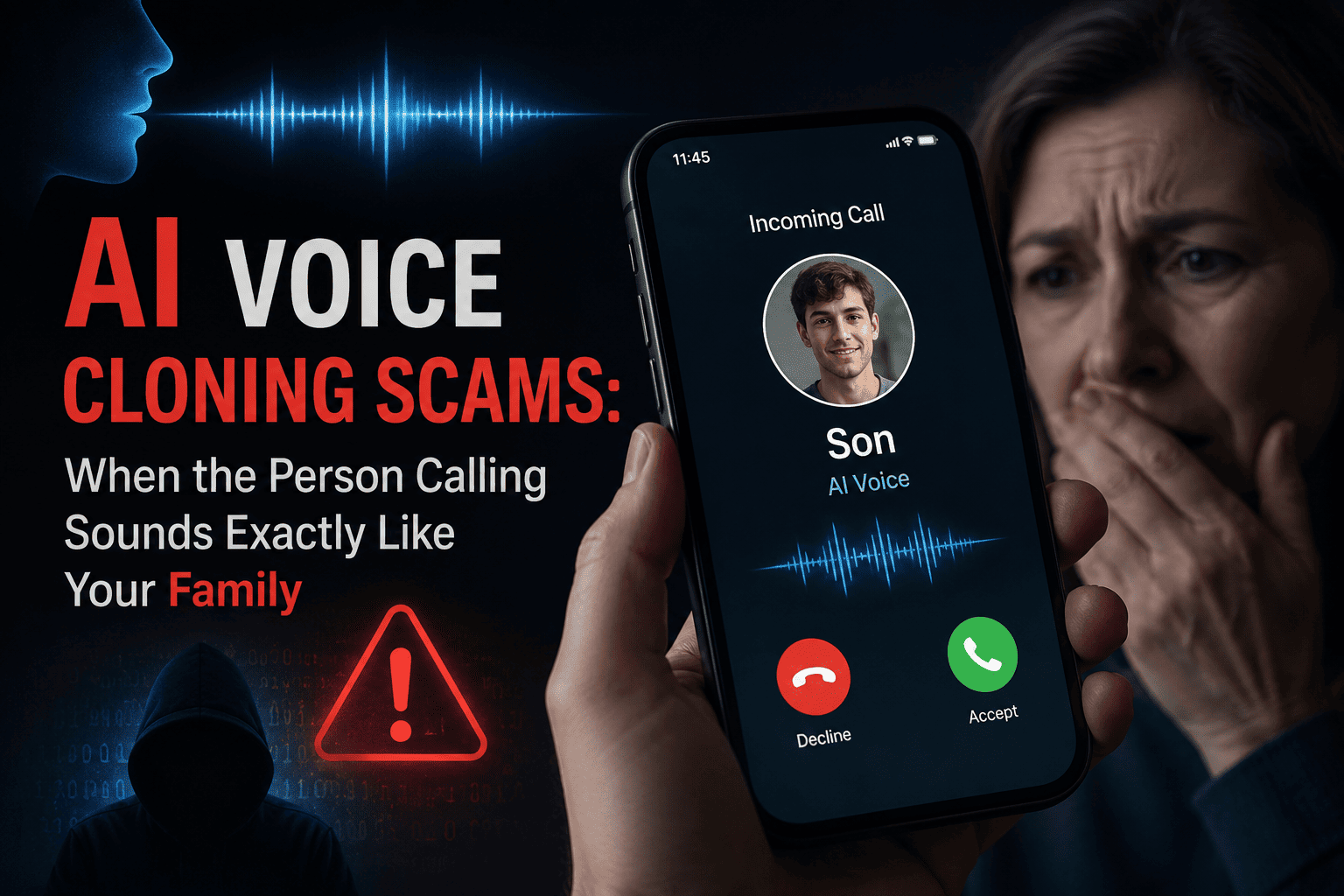
Voice cloning frauds take advantage of the theft of just a few seconds of a person’s voice, which may be acquired via a video or social media post, and then use an AI program to make the computer speak using that voice. In this scam, the scammers make a call to a family member, pretend that there is some kind of emergency situation, and demand money from the person before verifying the story. The fact that the voice cannot be trusted means that the best way to counter such scams is to hang up and give the caller a call back from a verified number.
The woman from California received a phone call from her daughter who was crying in distress. The voice on the other side of the phone line claimed that there had been a car crash, asked not to let anybody else know about the problem, and asked her for money.
Her daughter was safe at home the entire time. What came through the phone was a synthetic voice built from a short clip pulled from somewhere online, according to CNN’s reporting on the rise of voice cloning scams. Stories like hers are common enough now that the FBI tracks them as their own category of fraud.
This isn’t a futuristic threat. It’s happening in ordinary households, over ordinary phone calls, using a voice that sounds exactly like someone you love.
How AI Voice Cloning Scams Actually Work
The mechanics behind these calls are simpler than most people expect, and that simplicity is exactly what makes them scalable.
Where the voice sample comes from
The scammer does not require a professional studio recording; just a TikTok video, voicemail message, YouTube video, podcast interview, or even a Facebook video would do fine. Anybody recording videos, participating in video calls, and leaving voicemail messages is creating content that can theoretically be stolen and recycled later.
This is part of a bigger pattern of unintentional oversharing. We’ve covered how much hidden location data lives inside an ordinary photo; a public video works the same way, except what it leaks is your voice instead of your coordinates.
How little audio it actually takes
It was discovered that only three seconds of clean sound is enough to train a usable voice clone. After obtaining that clip, the scammer can simply enter any sentence and the voice AI will recite it using the identical voice, including tone and pace.
The script behind the call
Almost every version of this scam follows the same emotional shape:
- Distress: the cloned voice sounds like it’s crying, panicked, or in pain.
- A believable emergency: a car accident, an arrest, a kidnapping, or being stranded abroad.
- A request for secrecy: “don’t tell anyone else” or “don’t call the police,” which removes the verification step scammers fear most.
- A second voice: sometimes a fake “lawyer,” “officer,” or “bail bondsman” joins the call to add pressure and false authority.
- An urgent payment demand: wire transfer, gift cards, cryptocurrency, or a cash courier who shows up at the door.
The caller ID often looks familiar too. The Federal Communications Commission has documented how easily scammers falsify caller ID information to make a call appear to come from a trusted number.
Why the Old Red Flags Don’t Work Anymore
It was once advised that one should pay attention to any mechanical pauses, unemotional tone, or unusual choice of words. These were outdated pieces of advice. As reported by CNN, the vocal quirks which were once used to spot artificial voices have been eliminated in modern AI applications. According to experts, it is difficult for most people to distinguish between artificial and human voices.
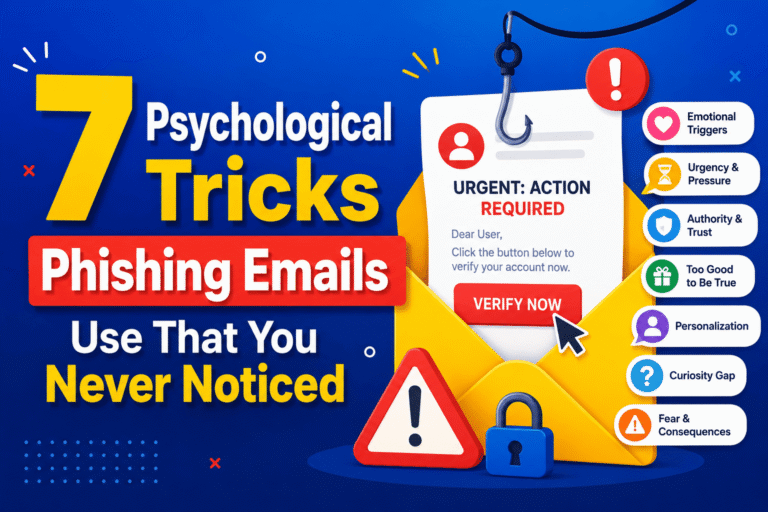
The emotional playbook is the same one we’ve broken down in email phishing psychology: manufactured urgency, a fake authority figure, and pressure to act before you can think it through. Only now it arrives as audio instead of text, which makes it hit harder.
This change alters the battle. It is not about listening more effectively, but rather ceasing to listen altogether and verifying the tale through another means.
Warning Signs That Still Hold Up
Even though the voice itself is no longer a reliable clue, the situation around the call almost always gives it away.
| Signal | What It Usually Means |
|---|---|
| Caller insists you tell no one else | Real emergencies rarely come with a gag order; secrecy protects the scammer, not you |
| Payment requested in gift cards, crypto, or wire transfer | Legitimate hospitals, courts, and bail offices don’t ask for these |
| A “lawyer” or “officer” joins the call immediately | The added voice is meant to rush you past the moment you’d normally pause |
| The call comes late at night or during a busy moment | Timing is chosen to catch you tired, distracted, or alone |
| You’re pressured to stay on the line while arranging payment | Keeping you on the phone stops you from calling anyone to check |
Payment Methods That Should Set Off Alarms
| Payment Method | Why Scammers Prefer It | Can It Be Recovered? |
|---|---|---|
| Wire transfer | Moves instantly, hard to trace once received | Rarely, unless caught within minutes |
| Gift cards | Untraceable once the code is shared | Almost never |
| Cryptocurrency | Irreversible, no central authority to appeal to | Essentially never |
| Cash via courier | No bank involved, no paper trail | Almost never |
If a request lands in this table, treat it as confirmation you’re dealing with a scam, not just a red flag worth weighing.
How to Verify a Caller Before You Send a Cent
None of these steps require special tools. They just require sixty seconds of delay, which is exactly what scammers are trying to prevent. The same discipline applies here as when you’re checking a suspicious fake PayPal email: verify through a channel the sender doesn’t control, never one they hand you.
- Hang up and call back. Use a number you already have saved for that person, not one they just gave you or that showed up on caller ID.
- Contact someone else who’d know. A sibling, coworker, roommate, or school can often confirm within minutes whether the person is really where the caller claims.
- Ask something only they’d know. Not a birthday or hometown, something personal that wouldn’t appear in a public video or post.
- Request a video call. Real-time video is still harder to fake convincingly than a short audio clip, especially if you ask them to do something unscripted.
- Refuse to stay on the line. Tell the caller you need to check and will call back. A genuine emergency survives a five-minute pause; a scam usually doesn’t.
Set a family safe word
Come up with an expression among your immediate family that is completely unrelated to your online posting, and refrain from using it in group chats or on social media sites. If the person you are talking to on the telephone cannot use it, you already know the answer.
Try This Tonight: A Five-Minute Family Drill
Select an evening this week and actually complete the task rather than just scheduling it. Send a fake safe word to your closest relatives via a text message. Speak it aloud over the phone once so that everyone knows how it sounds. Then remove it from all group chat apps that can potentially be accessed by a hacked account. That’s it. And that’s the simplest thing to protect yourself from scams that most families never do.
Should you trust a voice-detection app?
A growing number of apps claim to spot AI-generated voices in real time. They can help, but they shouldn’t be your only line of defense.
Pros
- Can flag suspicious audio patterns faster than a human ear
- Useful as a second opinion when something feels off
- Some are free and need no technical setup
Cons
- Accuracy drops as cloning tools improve, and the arms race favors the scammer
- Most require recording and uploading the call, which costs you time you don’t have
- None are reliable enough to replace a callback or a safe word
Alternative Verification Methods (If You Don’t Have a Safe Word Yet)
Not every family sets up a safe word before the call comes in. If that’s you, these fallback options still work.
| Method | Best For | Limitation |
|---|---|---|
| Callback on a saved number | Any relative or close friend | Doesn’t help if they genuinely can’t answer, like mid-flight |
| Ask a shared contact to check in person | Someone local to the situation | Takes time you may feel you don’t have |
| Request a live video call | Anyone with a smartphone | More advanced scams are starting to layer in fake video too |
| Contact the claimed location directly | Arrests, hospitals, embassies | You must look up the real number yourself, never one the caller provides |
What to Do If You’ve Already Sent Money
- Call your bank or payment provider immediately. Wire transfers can sometimes be recalled if you act within minutes.
- Report it to the FTC at ReportFraud.ftc.gov.
- File a complaint with the FBI’s Internet Crime Complaint Center, referenced in the FBI’s 2025 Internet Crime Report.
- Change passwords on any account the caller mentioned, and turn on login alerts so you’ll know immediately if anything else on your accounts gets touched next.
- Tell your extended family. The same cloned voice can be reused to call your parents, siblings, or kids next.
How Big Is This Problem, Really
The FTC has been sounding the alarm on this exact scenario since 2023, when it first warned that scammers were using AI to enhance classic family emergency schemes and later ran a public Voice Cloning Challenge to fund detection technology. Enforcement is still catching up to tools that scammers can already access for free.
The FBI’s 2025 Internet Crime Report tracked AI-related fraud as its own category for the first time in the bureau’s history.
| Stat | Figure |
|---|---|
| AI-related fraud complaints (2025) | 22,364 |
| Total losses tied to AI-enabled scams | Nearly $893 million |
| Losses from “help a loved one” voice-clone distress scams specifically | Over $5 million in confirmed cases |
| Total cybercrime losses reported by adults over 60 | $7.7 billion, up 59% year over year |
| Minimum audio needed to build a usable clone | As little as 3 seconds |
Those numbers almost certainly understate the real total, since many victims never report the loss or never realize AI was involved in the first place.
Final Verdict
The presence of the voice of a family member doesn’t mean you’ve spoken to the person since AI is able to recreate voices perfectly. Listening carefully will not help you prove anything either. The thing which can help is using a certain procedure: disconnect the line, call back on a known number, ask some questions which only the particular person could answer, and choose a password before. None of this requires any innovation—it just takes practice.
Frequently Asked Questions
Can AI really clone a voice from just a few seconds of audio?
Yes. Researchers, including a team at UC Berkeley, have found that current AI voice tools need as little as three seconds of clear audio to produce a convincing clone capable of speaking entirely new sentences in that voice.
How do scammers usually get the voice sample?
Most come from public content: social media videos, voicemail greetings, livestreams, podcast clips, or old video calls that were recorded without the speaker realizing it.
If the caller ID shows my family member’s real number, does that prove it’s them?
No. Caller ID can be falsified through a technique called spoofing, which the FCC has documented extensively. A matching number tells you nothing about who’s actually on the line.
What makes a good family safe word?
Something short and easy to remember that’s never been posted publicly, ideally unrelated to birthdays, pet names, or anything already visible on social media.
Are older adults the only targets?
No. Seniors are disproportionately targeted and lose the most money overall, but the same tactic works against people of any age, including workplace variants where a cloned “executive” voice requests an urgent wire transfer.
What should I do if I already sent money?
Contact your bank immediately to attempt a reversal, report the incident to the FTC and the FBI’s Internet Crime Complaint Center, and let your close family know so the same cloned voice can’t be used against them next.
The scariest part of this scam isn’t the technology. It’s how ordinary the moment feels right before it happens, a ringing phone, a familiar voice, a reason to act fast. Building one habit now, a callback, a safe word, a pause before you pay, is what keeps that ordinary moment from turning into a very expensive mistake.